


The Carnivore vs. Omnivore Debate: A Comprehensive Analysis of Canine Dietary Classification
In this article, I have attempted to be open-minded and neutral, gathering the most solid evidence to answering the carnivore vs. omnivore debate.
The classification of domestic dogs as either carnivores or omnivores represents one of the most contentious debates in comparative biology and veterinary nutrition. While my research has led me to conclude that dogs are fundamentally carnivorous, recent scientific discoveries have revealed some evolutionary adaptations that many say challenge this traditional view. This comprehensive analysis examines both sides of the debate, providing detailed anatomical, physiological, and evolutionary evidence to determine where dogs truly fit on the dietary spectrum.
Anatomical Evidence: The Carnivorous Foundation
Dental Architecture and Jaw Mechanics
The most compelling evidence for dogs’ carnivorous nature lies in their dental and cranial anatomy ^9. Dogs possess the classic carnivorous dental formula with prominent carnassial teeth (the fourth upper premolar and first lower molar) that function as efficient shearing blades ^12. These teeth operate with a scissor-like action that is specifically designed for cutting meat and breaking bones, not grinding plant matter.
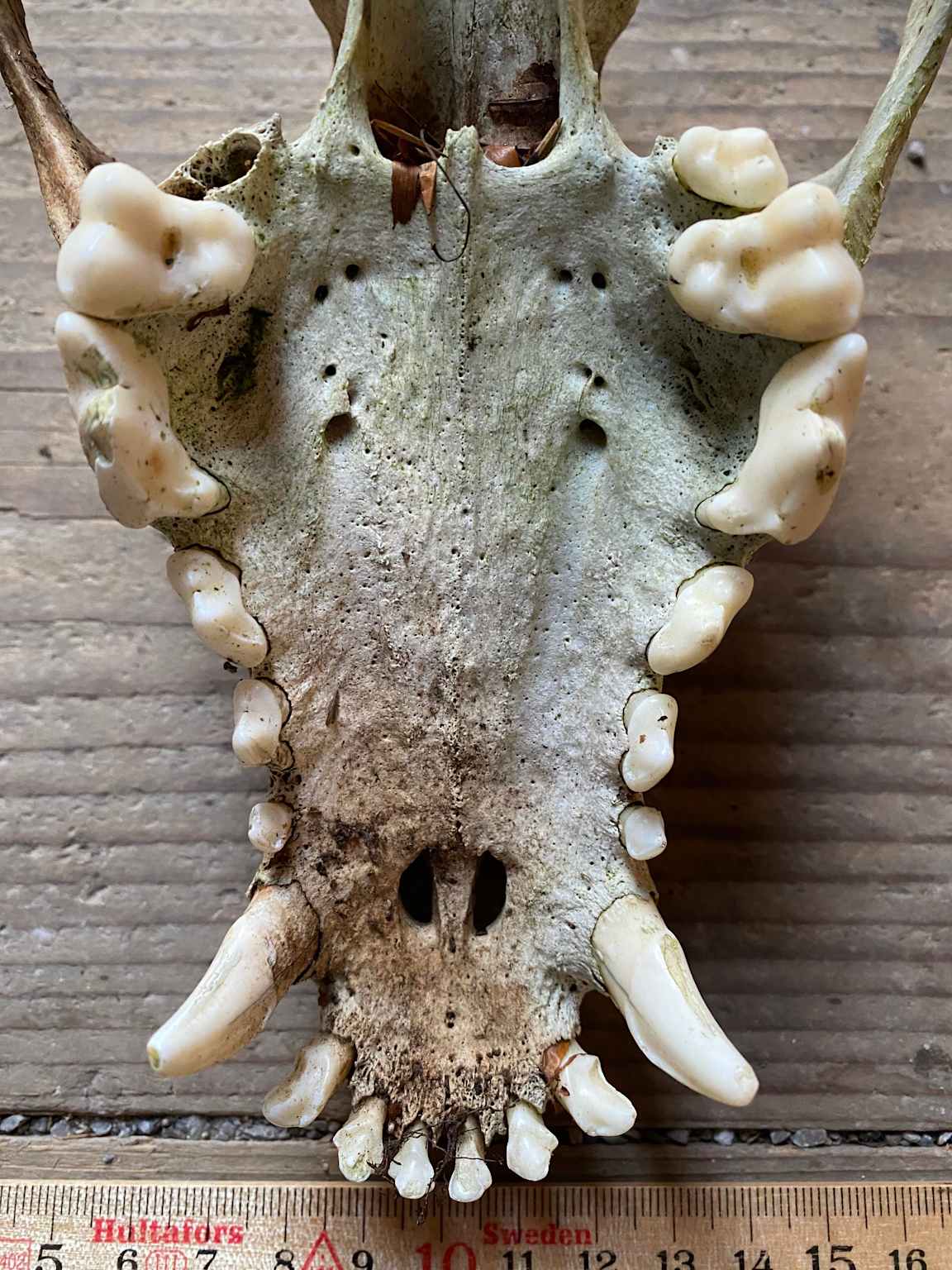
Close-up view of a canine skull showing teeth structure.
The jaw structure further reinforces this carnivorous classification ^14. Dogs exhibit primarily vertical jaw movement with limited lateral motion, characteristic of carnivores that need powerful bite forces for killing prey and processing meat ^12. This contrasts sharply with the complex lateral grinding motions seen in herbivores and true omnivores. The temporalis muscle, which provides the primary jaw-closing force, is massively developed in dogs, accounting for much of the bulk on the sides of their heads ^14.
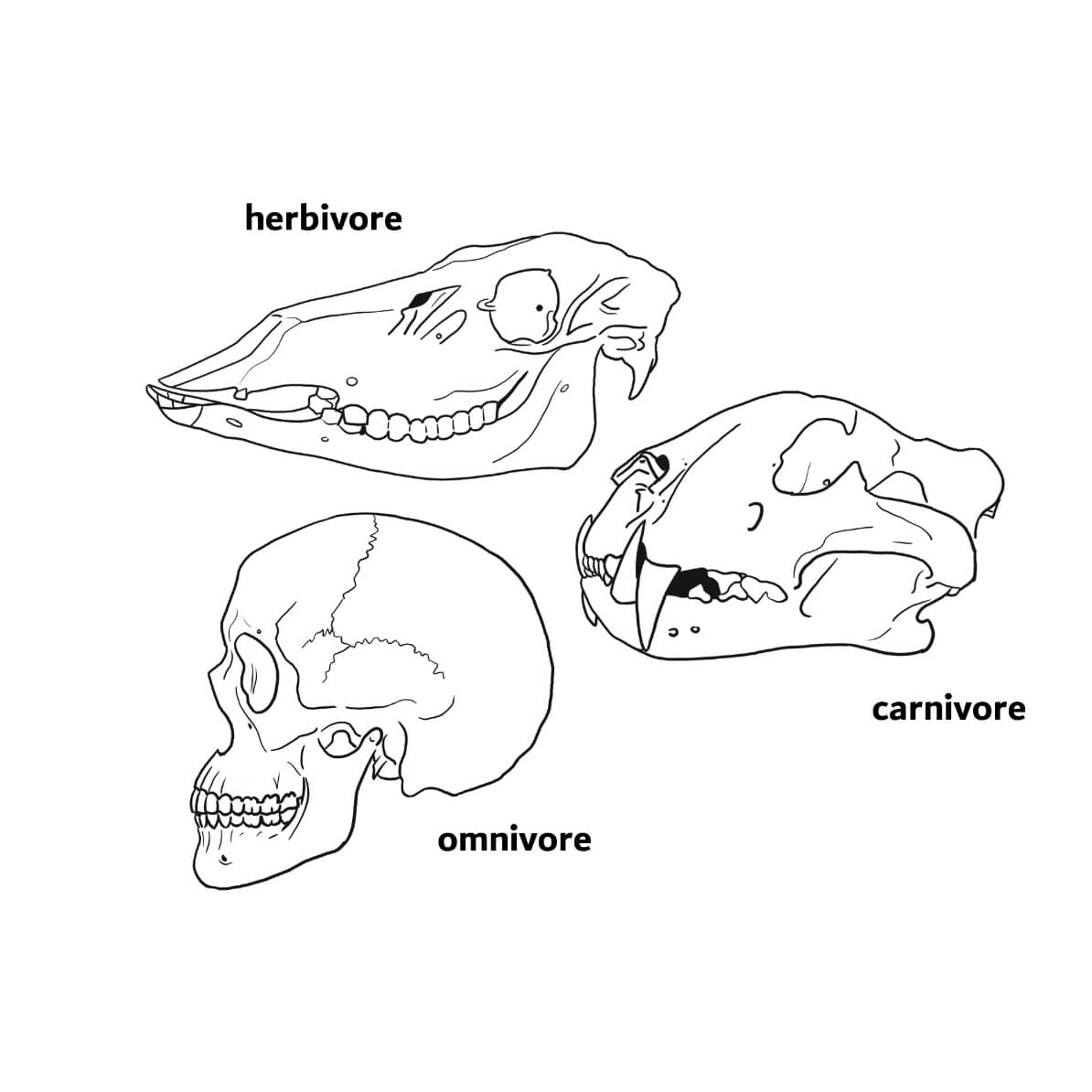
Skull and teeth comparison of a herbivore, carnivore, and omnivore.
Digestive System Architecture
The canine digestive system displays several unmistakably carnivorous characteristics ^2^8. Dogs possess a simple, single-chambered stomach that comprises 60-70% of their total digestive tract capacity, identical to obligate carnivores like cats ^2. This large stomach volume allows for the rapid consumption of large meat meals, a classic carnivorous adaptation for animals that make infrequent kills.
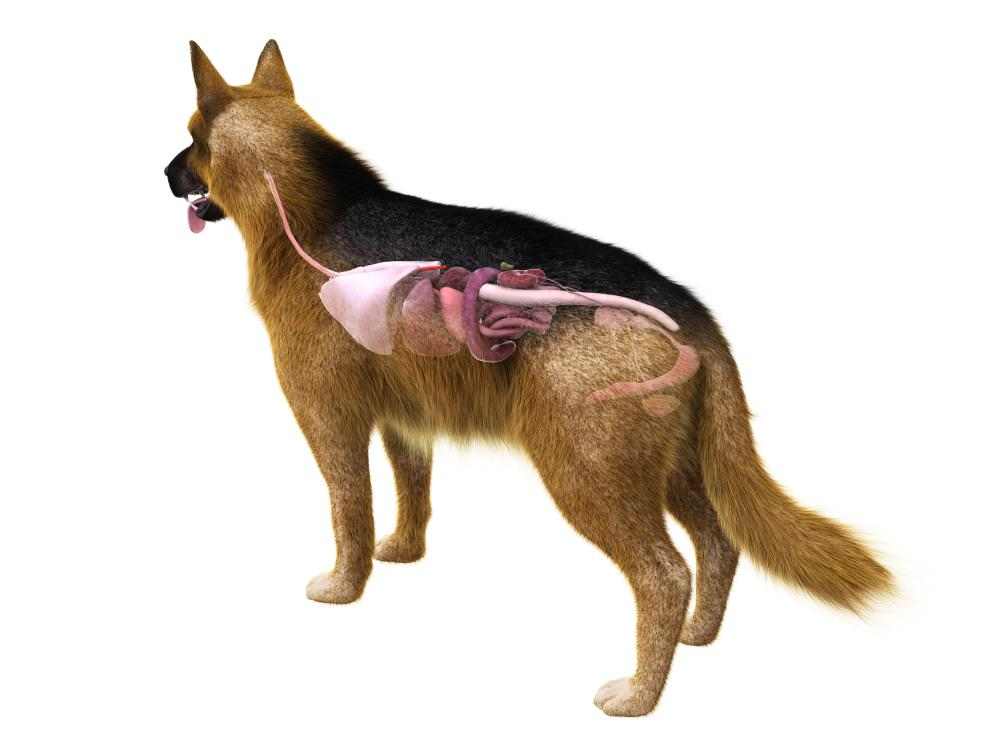
Anatomy of a dog’s digestive system.

Diagram of a dog’s digestive system anatomy.
The digestive tract length provides particularly strong evidence for carnivorous classification ^21. With a gut-to-body length ratio of approximately 6:1, dogs fall much closer to cats (3.5:1) than to true omnivores like humans (11:1) or pigs (14.5:1) ^23.
Stomach Acidity: The Acid Test
Perhaps the most definitive anatomical evidence lies in stomach acid production ^11. Dogs maintain extremely acidic gastric conditions with pH levels ranging from 1.5 to 2.1, effectively identical to obligate carnivores ^11. During active digestion, canine stomach pH can drop below 1.0, equivalent to car battery acid, and maintain this corrosive level for up to five hours ^11.

Stomach Acid pH Levels Across Different Animal Diet Types
This extreme acidity serves multiple carnivorous functions: rapid breakdown of meat and bone, efficient protein denaturation, and protection against meat-borne pathogens like Salmonella and E. coli ^11. Such acidic conditions are unnecessary for plant digestion and represent a clear carnivorous adaptation.
Physiological Evidence: Enzymatic Limitations
Absence of Salivary Amylase
A critical physiological marker distinguishing carnivores from omnivores is the presence or absence of salivary amylase, the enzyme that initiates starch digestion ^12. Dogs, like cats, completely lack salivary amylase production ^12. This absence forces the pancreas to bear the entire burden of starch digestion, making carbohydrate processing significantly less efficient than in true omnivores ^12.
Herbivores and omnivores produce substantial amounts of salivary amylase to begin breaking down plant starches immediately upon entering the mouth ^27. The lack of this enzyme in dogs suggests their digestive systems never evolved to handle significant amounts of plant matter efficiently.
Metabolic Capabilities
However, dogs demonstrate some metabolic capabilities that distinguish them from obligate carnivores ^22. Unlike cats, dogs can synthesize taurine from other amino acids and convert beta-carotene to vitamin A ^22. These abilities suggest some evolutionary adaptation away from a strictly carnivorous metabolism, though they don’t necessarily indicate omnivorous classification.
The Evolutionary Paradox: Evidence for Omnivorous Adaptation
The AMY2B Gene Revolution
The most significant challenge to the strict carnivore classification comes from recent genetic discoveries regarding the AMY2B gene, which codes for pancreatic amylase ^16^18. This research has uncovered evolutionary adaptation that occurred during dog domestication.

AMY2B Gene Copy Number Comparison Between Wolves and Dogs
Wolves, the direct ancestors of dogs, possess only two copies of the AMY2B gene ^16. In contrast, domestic dogs carry between 4 and 30 copies, with an average of 10 copies per individual ^16. This represents a five-fold increase in gene copy number, resulting in enhanced starch digestion capability ^16.
Timeline of Adaptation
Archaeological evidence suggests this genetic adaptation coincided with the Neolithic agricultural revolution, occurring between 10,000 and 7,000 years ago ^17. This timing strongly suggests that dogs evolved enhanced starch digestion as humans transitioned from hunter-gatherer societies to agricultural communities.

Timeline of Dog Evolution and AMY2B Gene Duplication
The adaptation appears to have provided survival advantages for dogs living alongside farming communities, where food scraps would have contained significant amounts of agricultural products like wheat, barley, and other grains ^16.
Microbiome Evolution
Comparative studies of gut microbiomes between wolves and dogs reveal further evidence towards omnivorous adaptation ^30. Domestic dogs harbor significantly higher populations of bacteria associated with carbohydrate metabolism, including families specifically adapted for cellulose digestion and glucose fermentation ^30. This microbial shift suggests dogs’ digestive systems have adapted to process more complex polysaccharides than their wolf ancestors.
The Modern Consensus: Facultative Carnivores
Scientific Classification
The scientific consensus now classifies dogs as “facultative carnivores” rather than true carnivores or omnivores ^2^6. This classification acknowledges that while dogs retain fundamentally carnivorous anatomy and physiology, they have evolved limited omnivorous capabilities as an adaptation to domestication.
The term “facultative” means contingent or optional, indicating that dogs primarily consume meat but can survive on non-meat foods when necessary ^4. This flexibility distinguishes them from obligate carnivores like cats, which have an absolute requirement for animal-derived nutrients.
This is why dogs can live for years on processed food (kibble). The question in my mind is: Is this a diet enough to sustain a healthy immune system? From my observations (from my longevity study) it is far from enough. It slowly degrades the immune system, opening the door for chronic disease, the worst of which is cancer.
Nutritional Requirements
Modern nutritional science supports this classification ^28^38. Dogs can synthesize many nutrients that obligate carnivores cannot produce, including taurine and certain vitamins ^28. However, they still demonstrate clear preferences for animal proteins and lack many of the digestive adaptations seen in true omnivores ^31.
Weighing the Evidence
Carnivorous Evidence Strength
The anatomical and physiological evidence for carnivorous classification remains overwhelming ^8^27. Dogs share virtually every major carnivorous characteristic: acidic stomachs, shearing teeth, vertical jaw mechanics, short digestive tracts, large stomach capacity, and absence of salivary amylase.
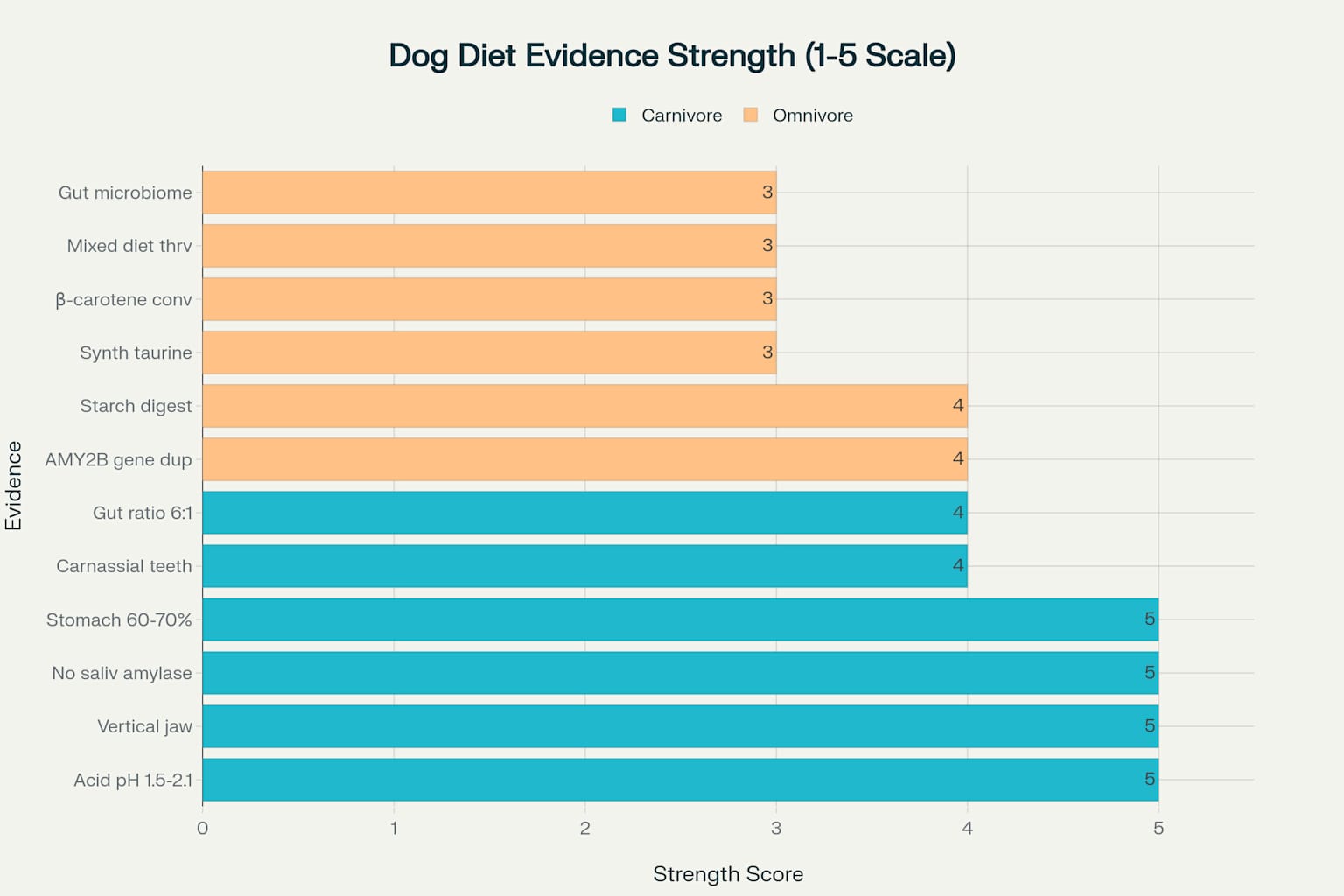
Evidence Strength: Carnivore vs Omnivore Classification for Dogs
Omnivorous Adaptations
However, the genetic and evolutionary evidence for omnivorous adaptation cannot be dismissed ^16^20. The AMY2B gene duplication represents a clear evolutionary response to dietary pressure, enabling dogs to extract nutrition from starch-rich foods that their wolf ancestors could not efficiently process.
There is no doubt that dogs show a move towards evolving closer to an omnivore, but this process of evolution towards another species can take thousands of years.
Conclusion: Resolution of the Debate
Based on this comprehensive analysis, dogs occupy a unique position on the dietary spectrum that defies simple classification. While they retain the fundamental anatomy and physiology of carnivores, they have evolved specific adaptations that allow some limited omnivorous function.
The evidence strongly supports classifying dogs as facultative carnivores—animals that are fundamentally carnivorous but have developed evolutionary adaptations for dietary flexibility. This classification acknowledges both the overwhelming anatomical evidence for carnivorous design and the clear genetic evidence for starch digestion adaptation.
My initial assessment that dogs are “much closer to carnivores than omnivores” is scientifically accurate. Dogs share far more characteristics with obligate carnivores than with true omnivores, with their omnivorous capabilities being limited to evolutionary adaptations rather than fundamental redesigns of their digestive systems.
For practical purposes, this means dogs thrive best on meat-based diets but can utilize certain plant-based nutrients more effectively than their wild ancestors. The facultative carnivore classification provides the most accurate scientific framework for understanding canine nutrition and dietary requirements.
My final words:
The above analysis is derived from in-depth research using a combination of AI tools and my documentation from the Long Living Pets Research Projects, a 30-year observational study of more than 5,000 dogs and cats fed a raw food diet.
What I see is an overwhelming benefit to feeding dogs a raw meat-based diet compared to kibble. I have not observed any benefit from adding plant matter to the diet. In some cases, I have seen the opposite, creating issues like itchy skin and leaky gut, which I suspect could be due to strong sensitivity to plant toxins in some veggies and fruits.
I hope you found value in this article; it is as science-based as I could make it. I also hope that if you feed your dog a vegan diet, you will reconsider that approach. I’m not going to dive deeper into that in this article. But, I hope you see that dogs are not there yet.


